


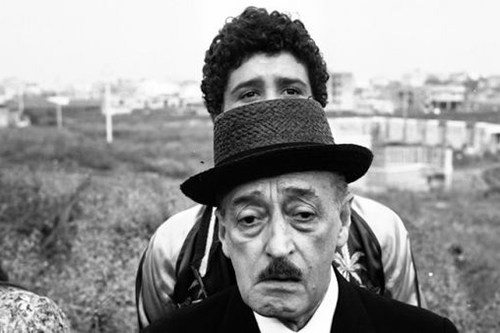
CinemaAperitivo: Uccellacci e uccellini [Große Vögel, kleine Vögel], I 1966, R: Pier Paolo Pasolini mit Totò, Ninetto Davoli, Femi Benussi, 89 Min, OmeU anschl. Aperitivo und Gespräch
Mit SPECIAL GUEST Autor, Journalist und Filmkritiker Piero Spila (u.a. Pier Paolo Pasolini. I film: guida critica per nuovi spettatori (2015); Tutto Pasolini (2022) von Gremese Verlag)
DE
Die pikareske Reise eines Vaters und eines Sohnes (das großartige, unerwartete Duo Totò und Ninetto Davoli), begleitet von einem sprechenden Raben, entlang der Straßen des Italiens des Wirtschaftsbooms und der „Neuen Vorgeschichte“.
Sie begegnen umherziehenden Künstlern, die sich durchschlagen, Ingenieuren im Dienste der Arbeitgeber, mittellosen Bauern, florierenden Prostituierten und Zahnärzten, die sich auf Dante spezialisiert haben. Pasolini konzipiert den Film als ein Märchen über die Krise der Ideologie, in dem innerhalb einer im Herzen der 1960er Jahre angesiedelten Erzählung eine weitere eingebettet ist, die von der franziskanischen Predigt an Falken und Spatzen handelt und im Mittelalter spielt. Nach „Mamma Roma“ bestätigt „Uccellacci e uccellini“ den Wandel des römischen Unterproletariats, das auf dem Weg ist, zum Kleinbürgertum zu werden (Totò Innocenti, der Vater und Hauptdarsteller, besitzt ein kleines Grundstück und geht hart gegen eine Bauernfamilie vor, die bei ihm Schulden hat).
Die Leidtragende dieses mittlerweile unaufhaltsam gewordenen Prozesses ist ein Intellektueller, der – wie im Märchen – die Gestalt eines Raben annimmt und schließlich von seinen beiden Reisebegleitern aus dem Subproletariat verspeist wird.
Abgesehen von einigen Sequenzen in „La ricotta“ ist es das erste Mal, dass Pasolini sich dem Stil eines mondähnlichen Humors zuwendet: Er wählt daher als Hauptdarsteller einen großen neapolitanischen Schauspieler, Totò, der ein erfreulich unerwartetes Duo mit Ninetto Davoli bildet, der hier sein Debüt gibt und dazu bestimmt ist, zum Inbegriff der jugendlichen und volkstümlichen Lebenskraft im Kino des Dichter-Regisseurs zu werden.
Roberto Chiesi
Noch nie habe ich einen Film so schutzlos, so zart, so zurückhaltend wie „Uccellacci e uccellini“ in die Welt entlassen. Er ähnelt nicht nur meinen früheren Filmen nicht, sondern auch keinem anderen Film. Ich spreche nicht von seiner Originalität, das wäre dumm und anmaßend, sondern von seiner Form, die der eines Märchens mit versteckter Bedeutung gleicht. Ein Märchen, das, wie alle anderen auch, aus einer Reihe von Prüfungen besteht, die die Helden bestehen müssen. Meine Helden scheinen in diesem Fall nach solchen Prüfungen jedoch keinerlei Privilegien zu erlangen: weder Königreiche noch Prinzessinnen. Nach diesen Prüfungen bleibt ihnen nichts anderes übrig, als sich weiteren Prüfungen zu stellen. Kein richtiges Märchen ist jemals so geendet! [...] Inmitten all dieser Schwierigkeiten hatte ich dafür die Freude, Toto und Ninetto zu dirigieren, einen Stradivari und eine kleine Flöte: Was für ein schönes kleines Konzert! Auch wenn ich mich also nicht unüberlegt auf die Seite jener Kritiker und Freunde stellen kann, die diesen Film für meinen besten halten, glaube ich doch mit noch größerem Stolz sagen zu können, dass es mein reinster Film ist.
Pier Paolo Pasolini
IT
ll viaggio picaresco di un padre e un figlio (la splendida, inattesa coppia Totò-Ninetto Davoli), accompagnati da un corvo parlante, lungo le strade dell’Italia del boom economico e della Nuova Preistoria. Incontrano artisti girovaghi bidonisti, ingegneri padronali, miseri contadini, fiorenti prostitute e dantisti dentisti. Pasolini concepisce il film come una favola sulla crisi dell’ideologia, in cui all’interno di un racconto ambientato nel cuore degli anni Sessanta se ne incastona un altro, sulla predicazione francescana ai falchi e ai passerotti, che si svolge nel Medioevo. Dopo Mamma Roma, Uccellacci e uccellini conferma la trasformazione del sottoproletariato romano che si sta avviando a diventare piccolo-borghese (Totò Innocenti, il padre protagonista, ha una piccola proprietà e infierisce contro una famiglia di contadini suoi debitori). Di questo processo, che ormai sta diventando inarrestabile, fa le spese un intellettuale, che, come nelle favole, ha sembianze di corvo e finisce per essere mangiato dai due sottoproletari suoi compagni di viaggio. A parte alcune sequenze di La ricotta, è la prima volta che Pasolini affronta il registro di un umorismo lunare: sceglie quindi come protagonista un grande attore napoletano, Totò, che forma una coppia felicemente inattesa con Ninetto Davoli, al suo esordio e destinato a diventare l’emblema stesso della vitalità giovanile e popolare nel cinema del poeta-regista.
Roberto Chiesi
Non ho mai dato un congedo a un film, così indifeso, così delicato, così riservato come Uccellacci e uccellini. Non solo non assomiglia ai miei film precedenti, ma non assomiglia a nessun altro film. Non parlo della sua originalità, sarebbe stupidamente presuntuoso, ma della sua formula, che è quella della favola col suo significato riposto. Una favola che, come tutte, consiste in una serie di prove attraverso cui gli eroi devono passare. I miei eroi, nella fattispecie, dopo simili prove, non sembrano però ottenere nessun privilegio: né regni né principesse. Non resta loro, dopo quelle prove, che affrontare altre prove. Nessuna vera e propria favola era mai finita così! [...] In mezzo a tanta difficoltà, ho avuto in compenso la gioia di dirigere Totò e Ninetto, uno stradivario e uno zufoletto: ma che bel concertino! Pertanto, anche se non posso imprudentemente schierarmi con quei critici e quegli amici che considerano questo il mio film migliore - credo, ancora con maggior orgoglio, di poter dire che è il mio film più puro.
Pier Paolo Pasolini
EN
The picaresque journey of a father and son (the splendid, unexpected duo of Totò and Ninetto Davoli), accompanied by a talking raven, along the roads of Italy during the economic boom and the “New Prehistory.” They encounter wandering artists, opportunistic con artists, engineers working for the bosses, destitute peasants, prosperous prostitutes, and dentists who specialize in Dante. Pasolini conceives the film as a fable about the crisis of ideology, in which a story set in the heart of the 1960s is embedded within another, set in the Middle Ages, about a Franciscan friar preaching to hawks and sparrows. Following *Mamma Roma*, *Uccellacci e uccellini* confirms the transformation of Rome’s underclass, which is on its way to becoming part of the petty bourgeoisie (Totò Innocenti, the father and protagonist, owns a small property and rages against a family of peasants who owe him money). An intellectual bears the brunt of this process, which is now becoming unstoppable; like in fairy tales, he takes the form of a raven and ends up being eaten by his two underclass traveling companions. Apart from a few sequences in *La Ricotta*, this is the first time Pasolini tackles a style of surreal humor: he therefore chooses as his protagonist a great Neapolitan actor, Totò, who forms a delightfully unexpected pairing with Ninetto Davoli, making his debut and destined to become the very embodiment of youthful and working-class vitality in the poet-director’s films.
Roberto Chiesi
I have never released a film as vulnerable, as delicate, as reserved as *Uccellacci e uccellini*. Not only is it unlike my previous films, but it is unlike any other film. I’m not talking about its originality, that would be foolishly presumptuous, but about its structure, which is that of a fairy tale with its hidden meaning. A fairy tale that, like all of them, consists of a series of trials the heroes must endure. My heroes, in this case, however, do not seem to gain any privileges after such trials: neither kingdoms nor princesses. All that remains for them, after those trials, is to face more trials. No real fairy tale had ever ended like this! [...] Amid all this difficulty, I did, however, have the joy of conducting Toto and Ninetto, one a Stradivarius and the other a little flute, but what a lovely little concert! Therefore, even if I cannot rashly side with those critics and friends who consider this my best film, I believe, with even greater pride, that I can say it is my purest film.
Pier Paolo Pasolini