


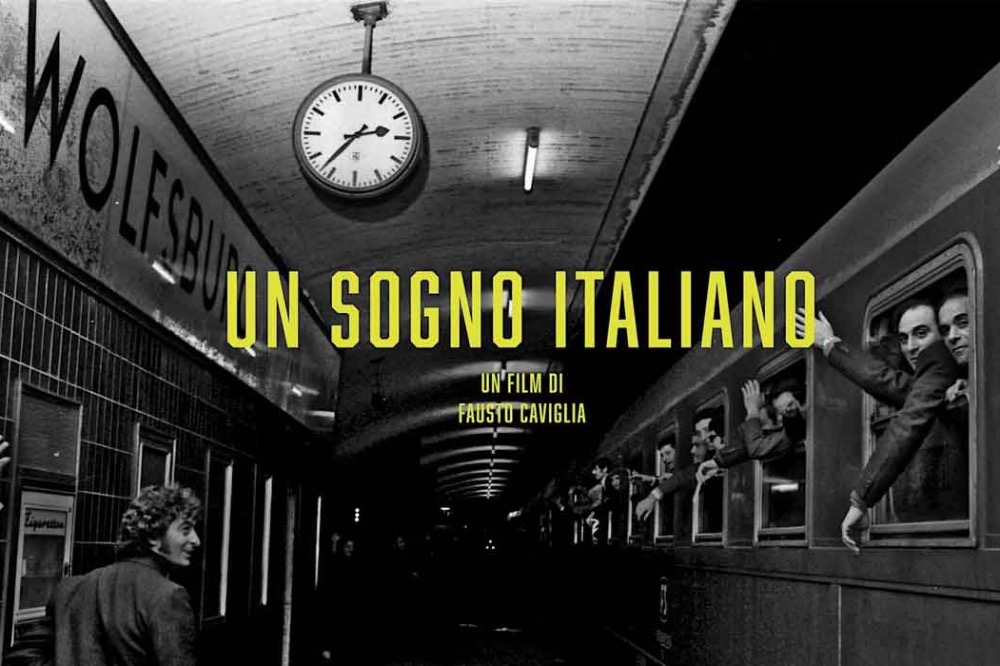
CinemAperitivo: UN SOGNO ITALIANO [OmeU] R: Fausto Caviglia; 75 Min
Im Anschluss Aperitivo und Gespräch mit dem Regisseur
[GER]
Im Jahr 2025 wird der 70. Jahrestag des italienisch-deutschen Abkommens von 1955 gefeiert, das Tausende Italiener nach Deutschland brachte. Viele von ihnen gingen in die Stadt Wolfsburg, den Sitz der aufstrebenden Automobilindustrie von Volkswagen. Anlässlich dieses Jubiläums, das den Beginn eines außergewöhnlichen Kapitels der Migration markierte, möchten wir einige der Etappen Revue passieren lassen, die unsere Ankunft auf deutschem Boden geprägt haben. Es ist eine Reise, die uns dazu anregen wird, an unsere Vergangenheit als Auswanderer zurückzudenken und daran, welchen langen Weg die Italiener zurücklegen mussten, um zunächst überhaupt als Menschen respektiert zu werden und im Laufe der Zeit ihren Wert unter Beweis zu stellen, bis sie schließlich zum Rückgrat der lokalen Wirtschaft wurden. Für viele, die aus einem nach dem Krieg noch immer verarmten Italien mit ungewisser Zukunft kamen, war es ein Moment der Hoffnung und bedeutete nicht nur den Traum, neue Möglichkeiten zu suchen, um das Leben ihrer Angehörigen zu verbessern. Es war auch ein großer Kampf um die Anerkennung ihrer Würde als Menschen, gleichberechtigt mit allen anderen. In Wolfsburg wie auch in anderen Städten war die Diskriminierung gegenüber Italienern und Ausländern offensichtlich. Oft hingen am Eingang von Lokalen Schilder, die Italienern den Zutritt untersagten.
Der Dokumentarfilm war eine spannende Reise, die anhand außergewöhnlicher Zeitzeugenberichte, Besuche an den Schauplätzen der Vergangenheit und originalem Archivmaterial nachgezeichnet wurde. Wir haben den Stimmen vieler Menschen gelauscht, die diese Jahre hautnah miterlebt haben und heute zu ikonischen Persönlichkeiten der italienisch-deutschen Gemeinschaft geworden sind.
Doch es war nicht nur eine Geschichte, die sich der Vergangenheit zuwandte. Es war auch eine Reflexion darüber, was Einwanderung in der heutigen Zeit bedeutet. Denn der Weg der Italiener in Deutschland war ein beschwerlicher, wie alle Migrationsbewegungen der Geschichte – ein Weg, der Zeit erforderte, aber letztendlich zu sichtbaren Ergebnissen führte.
Heute haben die Italiener in Deutschland die Machtzentren erreicht, sind an Entscheidungsprozessen beteiligt und tragen zur Entwicklung der Stadt bei. Die Vorurteile gegenüber den Italienern sind verschwunden. Zu ihrem Erfolg haben viele namenlose Einwanderer mit ihrem Leid, aber auch mit ihren Träumen beigetragen.
[ENG]
In 2025, we will celebrate the 70th anniversary of the 1955 Italian-German agreement that brought thousands of Italians to Germany. Many of them went to the city of Wolfsburg, home to the fledgling Volkswagen automotive industry. On the occasion of this anniversary, which marked the beginning of an extraordinary chapter in migration history, we want to retrace some of the milestones that characterized our arrival in Germany. It is a journey that will lead us to reflect on our past as emigrants and on how far Italians had to go to first be respected—even simply as human beings—and, over time, to prove their worth until they became the backbone of the local economy. For so many who came from an Italy that was still impoverished in the postwar period and faced an uncertain future, it was a moment of hope—and it represented more than just the dream of seeking new opportunities to improve the lives of their loved ones. It was also a great struggle to have their dignity as human beings recognized, on an equal footing with everyone else. In Wolfsburg, as in other cities, discrimination against Italians and foreigners was evident. Often, signs prohibiting Italians from entering were posted at the entrances to establishments.
The documentary was a fascinating journey, brought to life through exceptional testimonies, visits to historic sites, and original archival footage. We heard from many individuals who lived through those years firsthand and who have since become iconic figures in the Italian-German community.
But it wasn’t just a story about the past. It was also a reflection on the meaning of immigration today. Because the journey of Italians in Germany was a difficult one—like all migrations throughout history—a journey that took time but ultimately yielded tangible results.
Today, Italians in Germany have reached the centers of power, participate in decision-making processes, and contribute to the development of the city. Prejudice against Italians has disappeared. Many anonymous immigrants contributed to their success through their suffering, but also through their dreams.
[ITA]
Nel 2025 si festeggia il 70 anniversario dell’accordo italo tedesco del 1955 che portò migliaia di italiani in Germania. Molti di loro andarono nella città di Wolfsburg, sede della nascente industria automobilistica Volkswagen. In occasione di questa ricorrenza, che diede avvio a un capitolo straordinario di migrazione, vogliamo ripercorrere alcune delle tappe che hanno caratterizzato il nostro arrivo sul territorio tedesco. È un viaggio che ci porterà a ricordare il nostro passato di emigranti e quanta strada hanno dovuto fare gli italiani per riuscire dapprima ad essere rispettati anche solo come esseri umani e, nel corso del tempo, a far valere il proprio valore fino a diventare spina dorsale dell’economia locale. Per tanti che venivano da un’Italia ancora impoverita nel dopoguerra e con un futuro incerto, fu un momento di speranza e non rappresentò solo il sogno di cercare nuove opportunità per migliorare la vita dei propri cari. Fu anche una grande battaglia per vedere riconosciuta la propria dignità di esseri umani, al pari di tutti gli altri. A Wolfsburg, come in altre città, la discriminazione nei confronti degli italiani e degli stranieri era evidente. Spesso all’entrata dei locali c’erano dei cartelli che vietavano l’ingresso agli italiani.
Il documentario è stato un viaggio appassionante, ricostruito attraverso testimonianze d’eccezione, la visita ai luoghi del passato e materiale di repertorio originale. Abbiamo ascoltato le voci di molte figure che hanno vissuto in prima persona quegli anni e che oggi sono diventate personalità iconiche della comunità italo-tedesca.
Ma non è stata solo una storia rivolta al passato. È stata anche una riflessione su quello che è il senso dell’immigrazione ai giorni nostri. Perché quello degli italiani in Germania è stato un percorso faticoso, come tutte le migrazioni della storia, un percorso che ha richiesto tempo ma che alla fine ha portato risultati visibili.
Oggi gli italiani in Germania hanno raggiunto i centri di potere, partecipano ai processi decisionali e contribuiscono allo sviluppo della città. Il pregiudizio nei confronti degli italiani è scomparso. Al loro successo hanno contribuito tanti immigrati anonimi con la loro sofferenza, ma anche con i loro sogni.
[Fausto Caviglia]
Born in Tortona on May 24, 1971, Fausto Caviglia graduated in Political Science from the University of Milan in 1998. During his studies, he cultivated a strong passion for music and audiovisual language, which led him to undertake an internship with the renowned music television program Roxy Bar. This experience provided his first direct contact with the world of media production and encouraged him to pursue a career in communication.
He worked for several years as a copywriter in the creative department of Dolci Advertising, where he refined his storytelling and conceptual skills—tools that would later prove fundamental to his work as a director. Driven by the desire to turn his passion into a profession, he attended courses in directing and screenwriting at Cinelife in Milan, strengthening his technical foundations and beginning his professional collaborations. He worked as an assistant director both in Italy and abroad, collaborating with various filmmakers and gaining experience on international sets that broadened his creative perspective and working methods.
In 2004, he officially began his career as a filmmaker, directing his first awarded music video. This successful debut led him to continue directing short films, documentaries, and music videos, participating in numerous national and international film festivals and earning recognition for the originality of his style and the sensitivity of the themes he explores.
Of particular significance are his documentaries focusing on autism, Tramondi and Francesco e Bjorn, works that combine narrative rigor with deep human empathy, contributing to greater awareness of a still underrepresented subject.
In 2012, he directed the documentary Ciao Italia, which was released theatrically in Berlin, Milan, Rome, and Florence, confirming his ability to tell intimate stories with an international scope.
In 2025, he directed Un sogno italiano, a documentary produced by Orisa Produzioni which tells the story of Italian immigration to Germany, exploring its human, social, and cultural impact through the experiences of its protagonists.
He currently lives and works between Milan and Berlin, where he continues to develop new projects and collaborate with Italian and German production companies, pursuing a visual and narrative research that combines storytelling, music, and a strong attention to reality.